26.02.26
|Reading time:
5 min
Switching POS systems: how restaurants, bars, and cafés ensure a smooth transition
An outdated POS system slows down processes, complicates reporting, and costs valuable time in daily operations. Many hospitality businesses in Switzerland recognize this, yet hesitate to switch. Concerns about data loss or operational disruption are understandable.
With clear planning, however, a POS system can be transitioned in a controlled manner without unnecessary risks. For restaurants, bars, and cafés, this means greater efficiency, transparency, and planning reliability.
When is a switch worthwhile?
Switching becomes worthwhile when your current POS system causes more friction than support in day-to-day operations.
Typical signs include:
- complicated workflows requiring excessive searching instead of fast ordering
- lack of mobile order taking or limited flexibility
- time-consuming daily closings involving duplicate receipts, manual comparisons of card and cash payments, and paper-based staff confirmations
- delayed payouts or slow support
- missing integrations with key systems such as accounting or reservation systems
- lack of transparency in revenue and product data
Weaknesses often become visible in the details. If adjustments are only possible through workarounds or a bottle cannot be proportionally charged correctly, unnecessary extra effort arises. If several of these points apply, it is advisable to strategically reassess your existing solution.
What does switching a POS system cost?
When it comes to costs, many businesses ask the same question:
What exactly is included?
Typically, there are one-time costs as well as monthly fees. The key factor is whether support, updates and service availability during ongoing operations are included or charged separately.
It is equally important to know who your contact person is in daily operations. Is your industry understood? Are reviews of the support consistently positive and credible? And can you actually reach someone in an emergency?
A clearly structured model with transparently defined one-time and monthly costs ensures that the transition remains technically, organizationally, and financially manageable.
The benefits of a modern POS system
More efficient processes
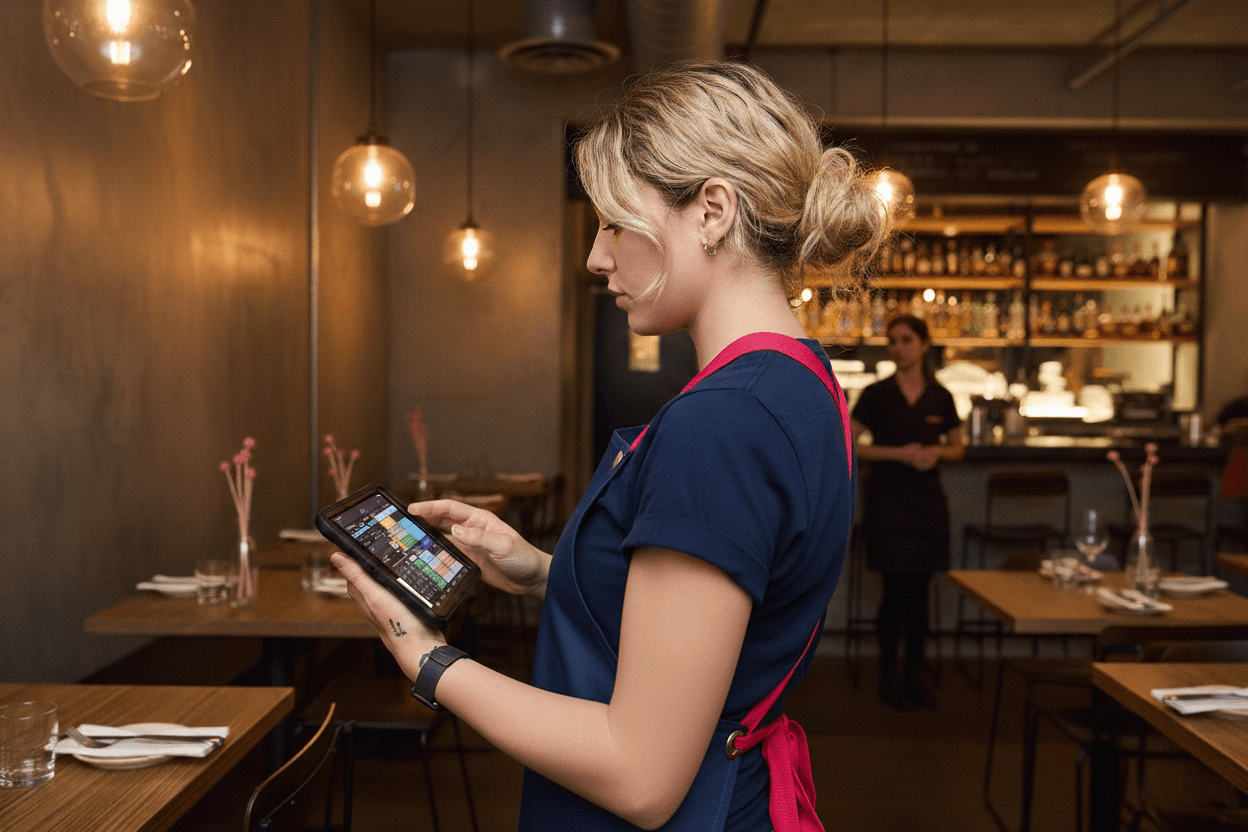
Mobile devices reduce walking distances. Orders are transmitted directly. Errors caused by duplicate entries are minimized.
Transparent reporting
Revenues, product groups, and product performance are accessible at any time. Decisions are based on clear figures rather than intuition.
Faster closings and payouts
A modern daily closing is clearly structured and digitally documented. Duplicate receipts, manual comparisons of cash and card payments, and separate confirmation lists are eliminated.
The closing process is system-guided and traceable. This saves time every day, reduces sources of error, and creates transparency toward trustees and accounting.
Modern payment solutions also enable significantly faster payouts, in some cases as early as the next day. This improves cash flow planning and strengthens financial stability in daily operations.
Autonomy and integration
Items, prices, or product groups can be adjusted directly in the dashboard. At the same time, accounting, reservation systems, or online orders can be connected.
An integrated system ensures that all figures are consolidated automatically. Revenues no longer need to be compiled from different sources or manually reconciled in the evening. This creates overview and saves time every day.
More efficient processes
Mobile devices reduce walking distances. Orders are transmitted directly. Errors caused by duplicate entries are minimized.
How the POS system switch works
A clearly structured process creates security and minimizes risks.
1.
Analysis and presentation
Existing processes and requirements are analyzed. The new system is presented online or on site.
2.
Data transfer and system setup
Importing an item list is generally possible, for example via a prepared file. Modern systems sometimes already provide support with AI.
The transition is also an ideal opportunity to clean up and restructure the menu and beverage list. At the same time, you become familiar with the dashboard and understand how items can be created or adjusted independently.
3.
Installation and training
The setup takes place online or on site. The team practices typical workflows directly in the system, including daily closing and payment reconciliation.
4.
Test phase and go live
After a short test phase, the official start takes place. Operations continue in a structured manner without unnecessary interruptions.
5.
Ongoing support
Even after go live, contact persons remain available. With clear planning, no unnecessary operational disruption occurs.
Interested?
Request a consultation here.
Conclusion
Switching to a new POS system in the Swiss hospitality industry is not a risky change, but a strategic optimization of your operational structure.
Those who proceed in a structured manner and rely on transparent costs and clear contact persons gain efficiency, overview, and security in daily operations. From service to daily closing to accounting, streamlined and traceable processes are established.
Vendomat supports hospitality businesses in this structured transition and provides solutions that meaningfully combine integration, usability, and reliable support.