21.01.26
|Reading time:
7 min
Are mobile POS systems better than stationary POS systems?
In short: In gastronomy, mobile POS systems offer clear advantages in many businesses. They shorten service routes, enable ordering and payment directly at the table, and reduce errors. Stationary POS systems remain useful where fixed sales points, self-service, or very high guest throughput are dominant. The best solution always depends on the specific gastronomy concept.
What is a mobile POS system in gastronomy?
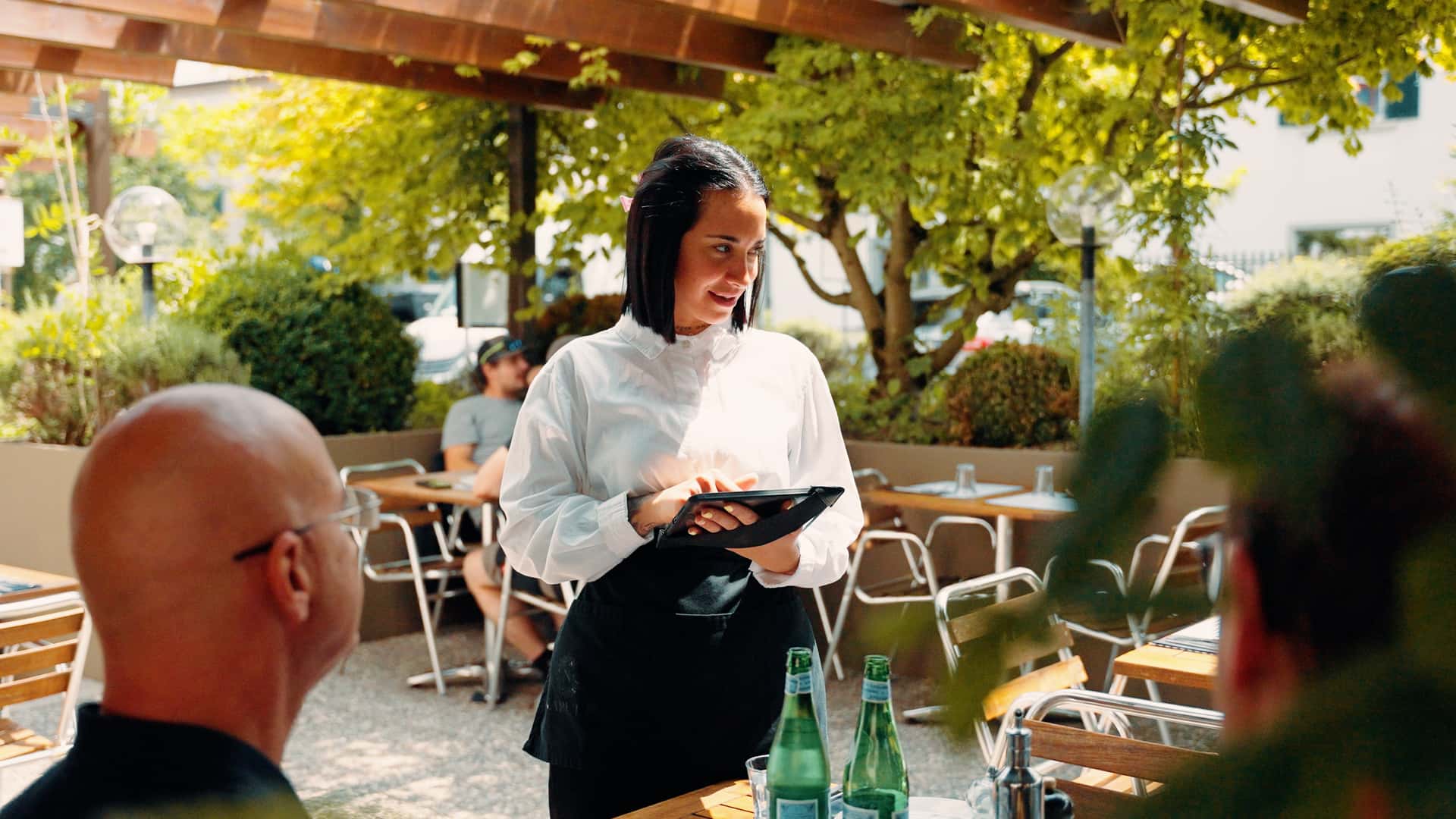
A mobile POS system allows service staff to take orders and accept payments directly with the guest. The system typically runs on smartphones or tablets and is cloud-based.
Modern mobile POS systems go far beyond simple order taking. They also enable direct payment at the table. Guests simply hold their card, smartphone, or smartwatch near the device used by the service staff, and the payment is processed contactlessly. Common payment methods such as mobile wallets as well as NFC-enabled credit and debit cards are supported.
Orders and payments are handled on a single device. This reduces hardware requirements, simplifies workflows, and speeds up service.
Typical use cases
- Restaurants and bistros
- Cafés and bakeries
- Bars and clubs
- Food trucks and event catering
- Hotels with restaurant operations
Benefits for gastronomy businesses
- Mobile and flexible: Payments directly at the table or with the guest
- Faster service: Fewer walking distances, quicker table turnover
- Reduced hardware: One device for ordering and payment
- Secure and compliant: Encrypted payments in line with common security standards and Swiss data protection requirements
What is a stationary POS system in gastronomy?
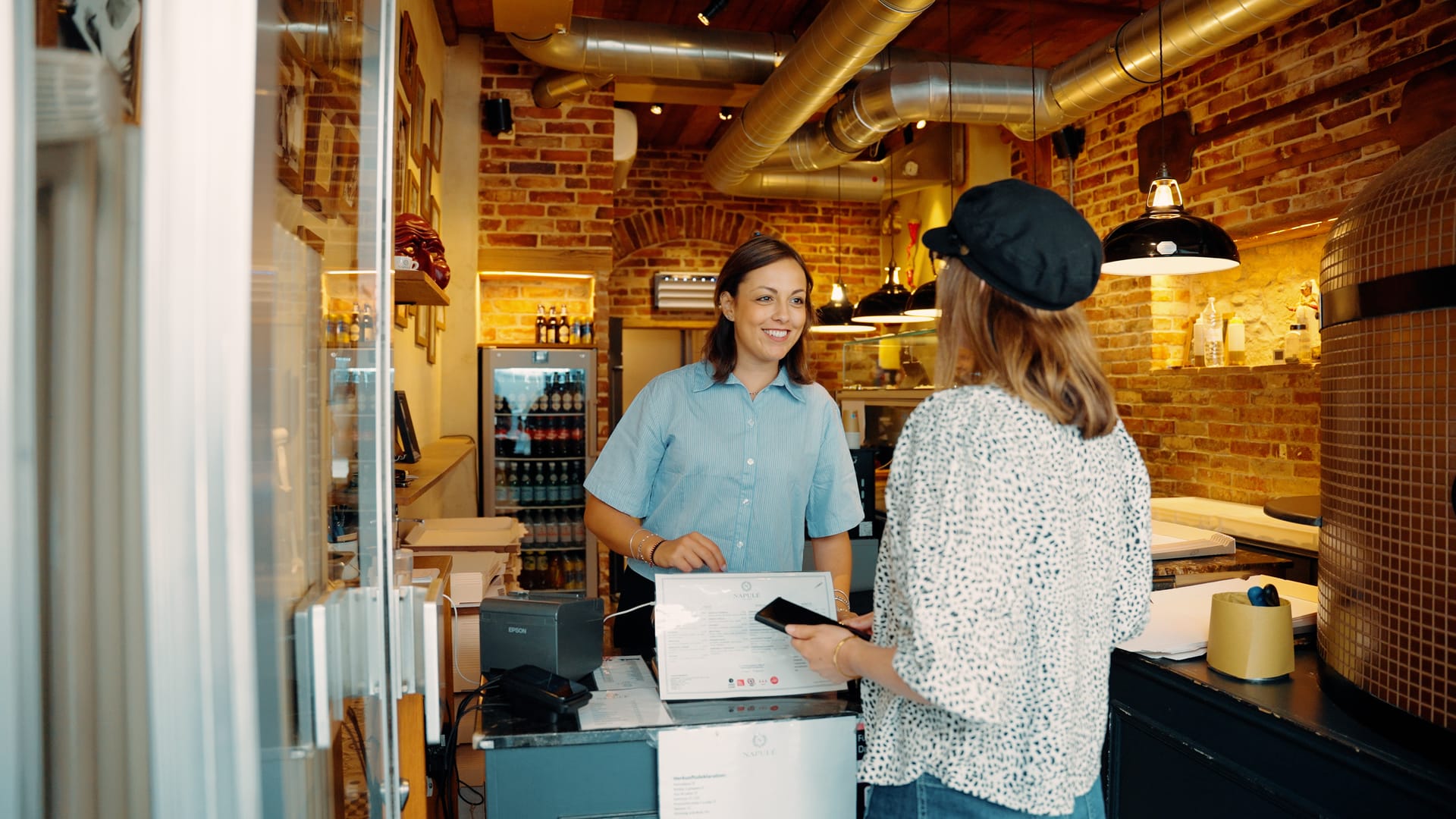
A stationary POS system is fixed to a specific location, such as the bar, buffet, or take-away counter. The classic setup typically consists of an iPad, a cash drawer, a receipt printer, and a separate card terminal.
This setup is particularly suitable where many payments are processed at a fixed point or where self-service concepts are used.
Typical use cases
- Bars with high guest volume
- Take-away concepts
- Canteens and staff restaurants
- Mountain huts and cable car operations
- Self-service restaurants
Stationary POS systems ensure stable workflows and clear oversight during peak periods.
Modern alternatives to the classic POS setup
Modern POS systems also support fully digital setups. Instead of printed receipts, digital receipts can be provided via QR code or email. In the kitchen, kitchen monitors increasingly replace paper tickets and display orders clearly and in real time.
These digital components reduce paper usage, maintenance effort, and potential errors while supporting efficient and sustainable gastronomy operations.
When are mobile POS systems the better choice?
Mobile POS systems are particularly effective when table service and flexibility are key.
Especially suitable for
- Restaurants and bistros with table service
- Cafés with indoor and outdoor seating
- Hotel restaurants
- Food trucks and events
- Mountain huts with multiple service zones
Advantages in daily operations
- Orders captured directly at the table
- Payments processed without a separate terminal
- Reduced walking distances for service staff
- Faster payment processes
- Higher guest satisfaction
When are stationary POS systems the right solution?
Stationary POS systems are ideal where workflows are clearly structured and many guests are served in a short time.
Especially suitable for
- Bars and clubs with high throughput
- Canteens and staff catering
- Cable cars and self-service operations
- Take-away counters
Advantages in daily operations
- Clear processes during peak times
- High operational stability
- Ideal for fixed sales points
- Efficient handling of self-service
Which solution fits your gastronomy concept?
In practice, many gastronomy businesses use a combination of mobile and stationary POS systems. Mobile devices support service and payment at the table, while stationary POS systems handle bar service, take-away, or central billing.
This combination ensures efficient workflows, fewer errors, and stable daily operations.
Conclusion
Mobile POS systems offer clear advantages in gastronomy when flexibility, service speed, and guest experience matter most. Stationary POS systems remain essential for fixed sales points and self-service concepts. The key question is not mobile or stationary, but which setup best fits your operational processes.
Does this fit your business?
A modern POS system should adapt to your gastronomy concept, not the other way around. Whether mobile service, fixed sales points, or a combination of both – the system must be reliable and scalable as your business grows.
Review the switch to a modern POS system
Vendomat provides a POS solution that covers both mobile and stationary requirements and is specifically designed for the needs of gastronomy. The system supports restaurants, cafés, bars, canteens, food trucks, as well as hospitality.